
Training
Training on the Methodology for Drafting Legislation and Conducting Supporting Assessments
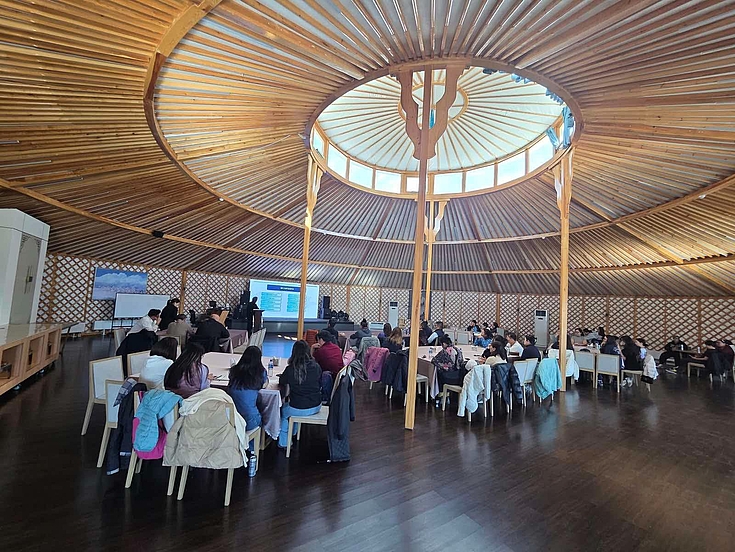
The training was organised at the initiative of the Centre for German and European Law, with the support of the Hanns Seidel Foundation and the Faculty of Law of the National University of Mongolia, as part of a project funded by the Federal Foreign Office of Germany. The participants consisted exclusively of academic staff from the Faculty of Law of the National University of Mongolia.
The training focused on legislative drafting methodology; conducting ex-ante assessments to identify regulatory needs; ex-post evaluation of the effects of existing legislation; calculating the costs associated with implementing legislation; and assessing the potential impacts of draft legislation.
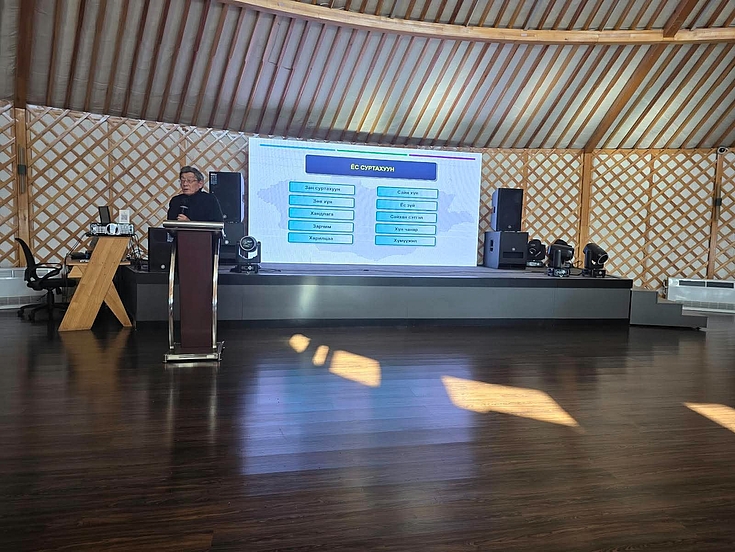
As part of the training, Academician Professor S. Narangerel, Professor Emeritus of the National University of Mongolia, delivered a lecture entitled “The Spirit of the Law.” M. Munkhbat, President of the Mongolian Lawyers Association, presented on the methodology for conducting ex-ante assessments to identify regulatory needs.
In addition, Dr. T. Zolboo, Associate Professor at the Faculty of Law, addressed the methodology for ex-post evaluation of the effects of existing legislation. Dr. B. Batbayar, also an Associate Professor at the Faculty of Law, presented on legislative drafting methodology.
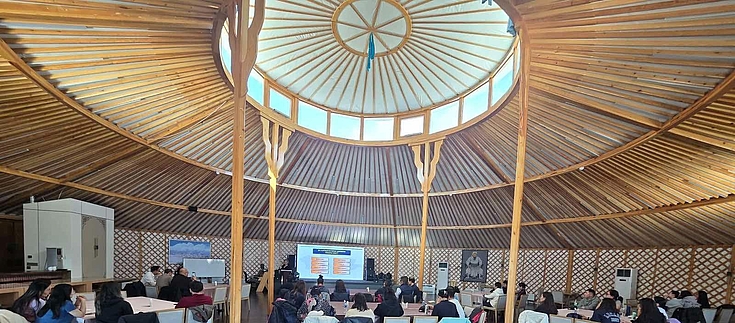
On the second day of the training, Dr. B. Baasandorj, Researcher and Lecturer at the Faculty of Law, explained the methodology for calculating the costs associated with implementing legislation. Dr. D. Bayar, Doctor of Law and Lecturer at the Faculty of Law, addressed the methodology for assessing the impacts of draft legislation.
The training aimed to strengthen the professional and methodological capacities of the Faculty of Law’s academic staff in legislative drafting, legal research, and legislative impact assessment. The knowledge and methods acquired are expected to be applied in university teaching and research, as well as in contributing to legislative processes.
By specifically engaging university lecturers and researchers, the training also sought to create a sustainable multiplier effect. Participants will be able to share their newly acquired knowledge with future legal professionals and other researchers, thereby contributing to the long-term improvement of legislative quality in Mongolia.