
Training
Promoting a Positive Organizational Culture and Child-Friendly Justice
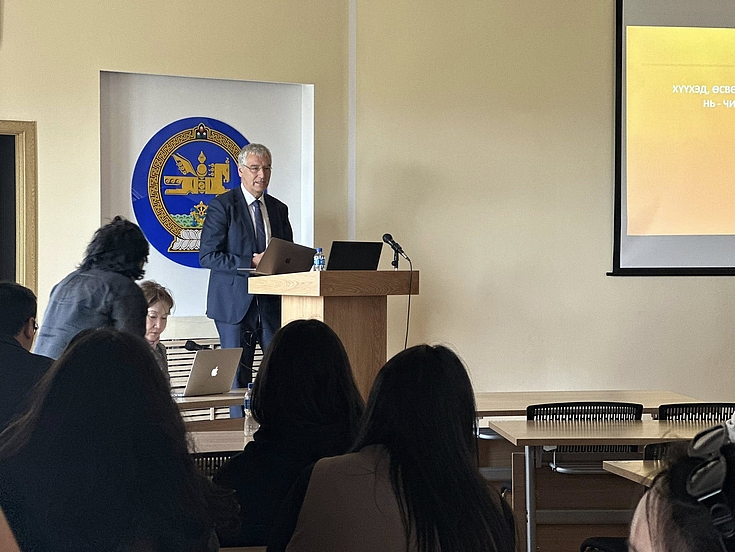
For more than three decades, the Hanns Seidel Foundation has been supporting the development of the rule of law and the strengthening of a human rights-based legal system in Mongolia. With the planned establishment of specialized family and juvenile courts, enhancing the professional capacities of judges and court personnel in the field of child protection has become increasingly important.
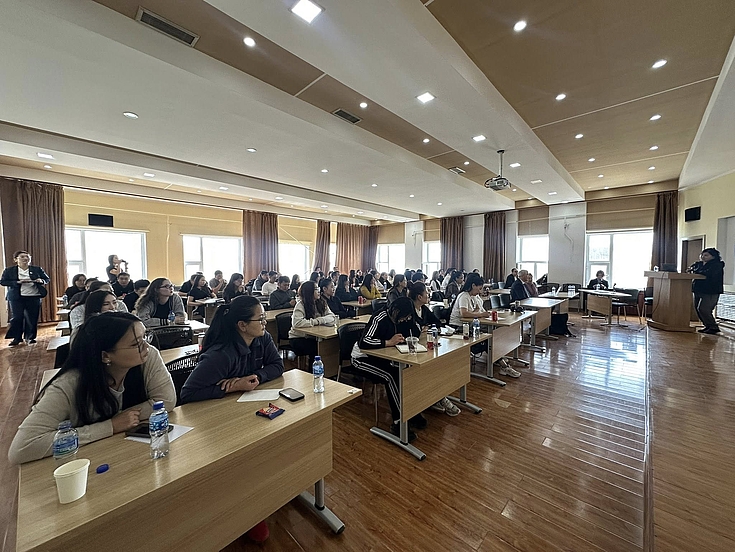
In this context, the Hanns Seidel Foundation, in cooperation with the General Council of the Judiciary of Mongolia, organized a training on “Positive Organizational Culture” for court staff responsible for handling simplified criminal and civil proceedings. The training aimed to strengthen awareness of the importance of a professional and supportive workplace culture while fostering a better understanding of the needs of children and young people within the justice system.

Professor and psychologist Mark Stemmler from Friedrich-Alexander University Erlangen-Nuremberg participated as a guest speaker. He shared insights into the psychological development of children and adolescents, highlighted their specific needs when interacting with the justice system, and presented international experiences and approaches to child-friendly justice. He also engaged participants in discussions on personal development, managing workplace stress, maintaining a healthy work-life balance, and promoting a respectful and supportive working environment.
The program was further enriched by presentations from P. Zolzayaa, Chairperson of the General Council of the Judiciary, as well as psychologists A. Taivanjargal and Sh. Nomin-Erdene. Their contributions encouraged productive discussions and provided participants with opportunities to exchange experiences and explore practical approaches to strengthening a professional and human rights-oriented judicial culture.
The training highlighted that effective child protection depends not only on legal regulations and institutional reforms but also on professional competence, awareness, and a positive organizational culture that places the rights and well-being of children at its center.