Training
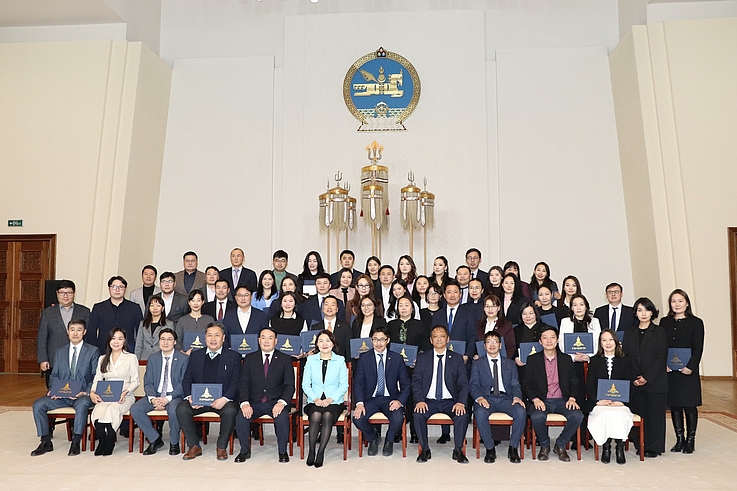
The “Training for Legislative Drafters” is held on March 12–13, 2026.
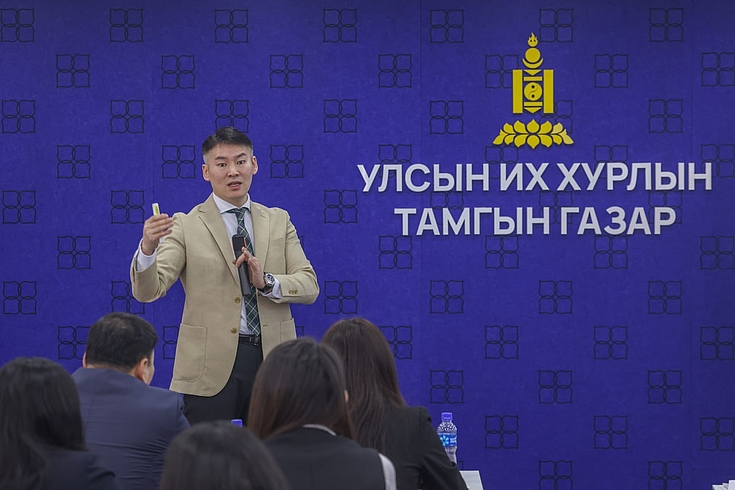
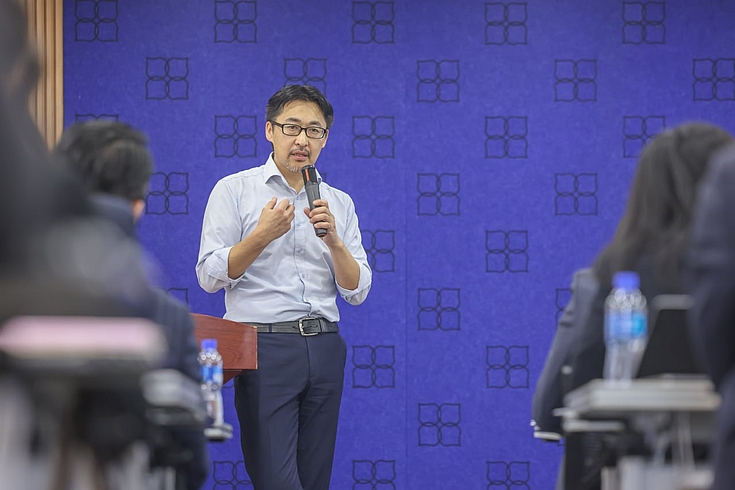
Within this objective, the Secretariat of the State Great Khural organized a training program for legislative drafters and legal professionals from 12 to 13 March 2026 and awarded certificates to participants who successfully completed the training. Based on additional requests submitted by the staff offices of the Mongolian People’s Party and the Democratic Party in the State Great Khural, as well as by the association of advisors and assistants to Members of Parliament, the training—accredited by the Mongolian Bar Association—was organized again on 12–13 March 2026.
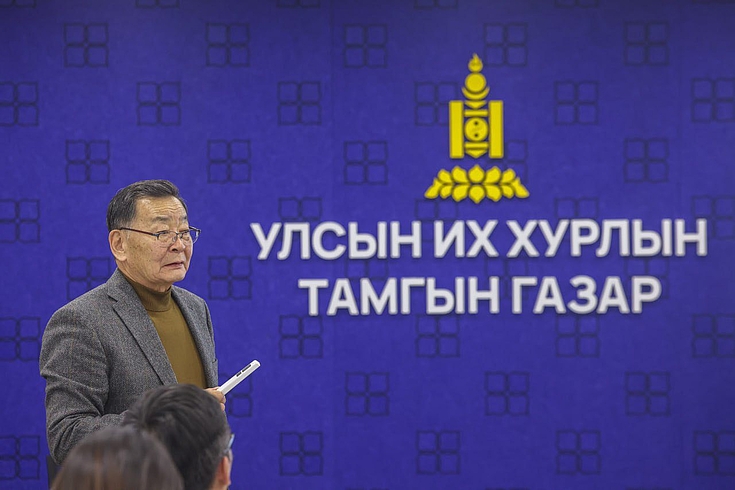
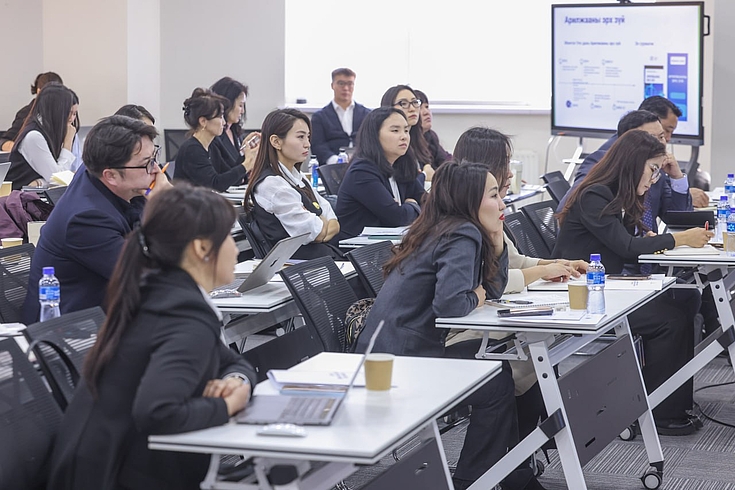
The “Legislative Drafting Training” was jointly organized by the Secretariat of the State Great Khural, the Parliamentary Research and Development Institute, the Mongolian Bar Association, the Hanns Seidel Foundation, and the German–European Law Center of the National University of Mongolia. The training was successfully conducted within a clearly defined structure and program and concluded with effective outcomes.
Training Content – 12 March
- Meaning of the drafters of legislative proposals – Dr. iur. Prof. L. Ulziisaikhan, Secretary General of the Parliamentary Secretariat
- Substantive requirements for laws II: The principle of appropriateness – Dr. iur. Prof. L. Ulziisaikhan, Secretary General of the Parliamentary Secretariat
- What is a law? – Prof. N. Lundendorj, Doctor of Legal Sciences (Sc.D.), Doctor of Philosophy (Ph.D.)
- The legislative process – Dr. iur. Prof. L. Ulziisaikhan, Secretary General of the Parliamentary Secretariat, together with B. Oyun-Erdene, Legal Policy Advisor to the Speaker of Parliament
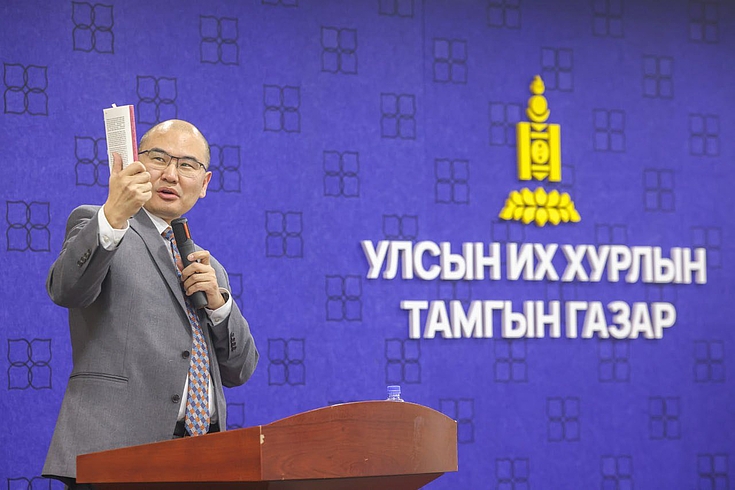
- Application of design thinking to legislative action – G. Erdenebat, Deputy Head of the Parliamentary Secretariat
- Substantive requirements for laws I – Prof. N. Lundendorj, Doctor of Legal Sciences (Sc.D.), Doctor of Philosophy (Ph.D.)
- Technical requirements for laws I – O. Munkhsaikhan, Member of the Constitutional Court of Mongolia, Dr. iur. (LL.D.), Associate Professor
- Substantive requirements for laws II: Consistency and further principles – Dr. iur. Prof. L. Ulziisaikhan, Secretary General of the Parliamentary Secretariat
- Technical requirements for laws II – J. Sainkhishig, Head of the Department for Evaluation of the Implementation of Legislation of the Parliamentary Secretariat, LL.M.
Training Content - 13 March
- Methodology of legal reception in the drafting of laws – B. Amarsanaa, Dean of the Faculty of Law of the National University of Mongolia, Dr. iur. (LL.D.)
- Concept, theory and methodology of legal reception; reform policy – S. Batbayar, Lecturer at the Faculty of Law, Dr. iur. (LL.D.)
- Methodology for preliminary analysis of legislative needs – M. Munkhbat, President of the Mongolian Bar Association
- Methodology for evaluating the effectiveness of legislative proposals – D. Bayar, Lecturer at the Chair of Public Law of the Faculty of Law of the National University of Mongolia and Senior Researcher at the Center for German and European Law
- Methodology of drafting legislative proposals – B. Batbayar, Associate Professor at the Chair of Public Law of the Faculty of Law of the National University of Mongolia and Senior Researcher at the Center for German and European Law
- Methodology for estimating the costs associated with the implementation of laws – B. Baasandorj, Lecturer at the Chair of Public Law of the Faculty of Law of the National University of Mongolia and Senior Researcher at the Center for German and European Law
- Methodology for evaluating the effects of the implementation of legislation – T. Zolboo, Director of the Center for German and European Law of the National University of Mongolia, Dr. iur., Associate Professor
- Technical requirements for laws III: Consequences of improper legislative drafting – N. Munkhzesem, Senior Advisor, Department of Legal Analysis, Parliamentary Secretariat
- Technical requirements for laws III: Procedural steps and regulatory standards – S. Dorjkhand, Lawyer and Researcher