
Training
The “Training for Legislative Drafters” is held on February 10–13, 2026.

On the basis of this program, the Parliamentary Secretariat, in cooperation with the Mongolian Bar Association, the project “Strengthening Parliamentary Institutions” of the Swiss Agency for Development and Cooperation (SDC), the Hanns Seidel Foundation, and the Center for German and European Law of the National University of Mongolia, organized the training entitled “Training for Legislative Drafting Officers” from 10 to 13 February 2026.
The training was conducted under the theme “Training for Legislative Drafting Officers.” Participants included staff members of the Parliamentary Secretariat (legislative drafting officers and lawyers), as well as representatives of the Office of the President, the Cabinet Secretariat, central government administrative bodies, and the legal affairs divisions of institutions whose members and leadership are appointed by Parliament.
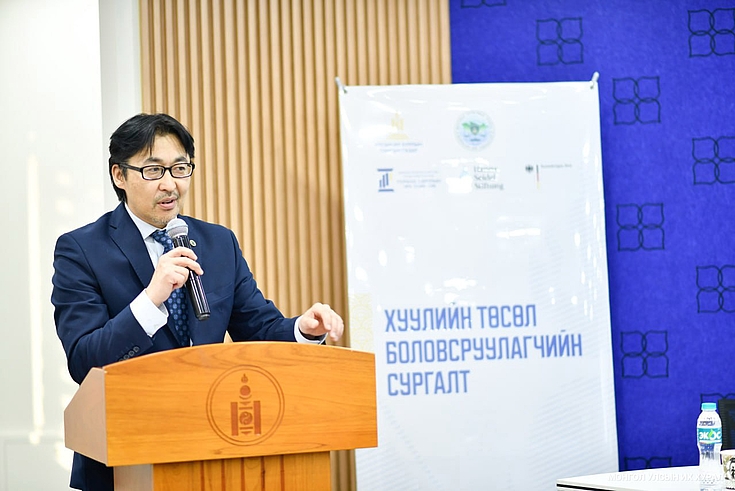
The training was opened by the Secretary General of the Parliamentary Secretariat, Professor L. Ulziisaikhan, Dr. iur., and by the President of the Mongolian Bar Association, M. Munkhbat.
At the opening ceremony, special emphasis was placed on the fact that this year’s curriculum was supplemented with additional content on the application of the principle of proportionality in the restriction of human and fundamental rights.

In the course of the training, Professor N. Lundendorj, Dr. iur. (Ph.D.), pointed out that initiating and adopting numerous laws without giving due consideration to the resources required for their implementation could have negative effects on the lives of citizens. Using concrete examples, he explained the problems arising from laws that were adopted without sound economic calculation and are insufficiently implemented. This leads to deficiencies in law enforcement and undermines the principles and values of the rule of law. In this context, he referred to the 2019 constitutional amendment, which, inter alia, stipulates: “… the scope and limits of the powers of legislators shall be determined by law.” In conclusion, he emphasized that the supreme purpose of law is to ensure the rule of law—not the rule over people.
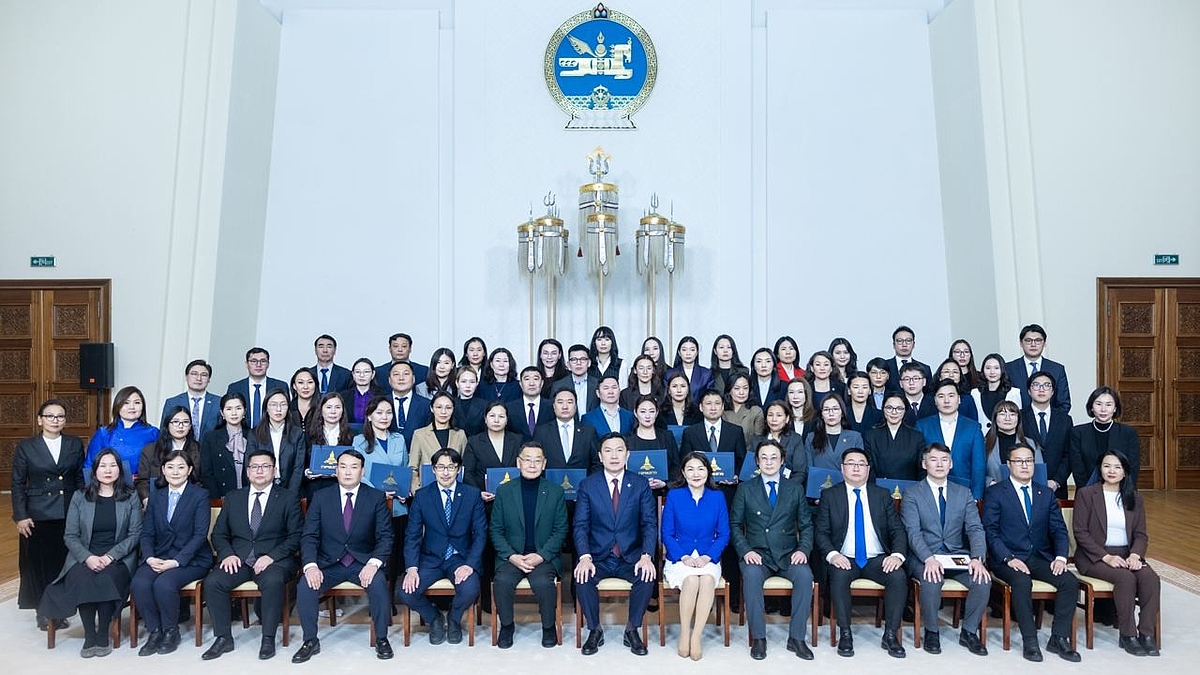
The training conducted from 10 to 13 February 2026 concluded with the awarding of certificates to the successful participants, as well as the allocation of the corresponding credit points.