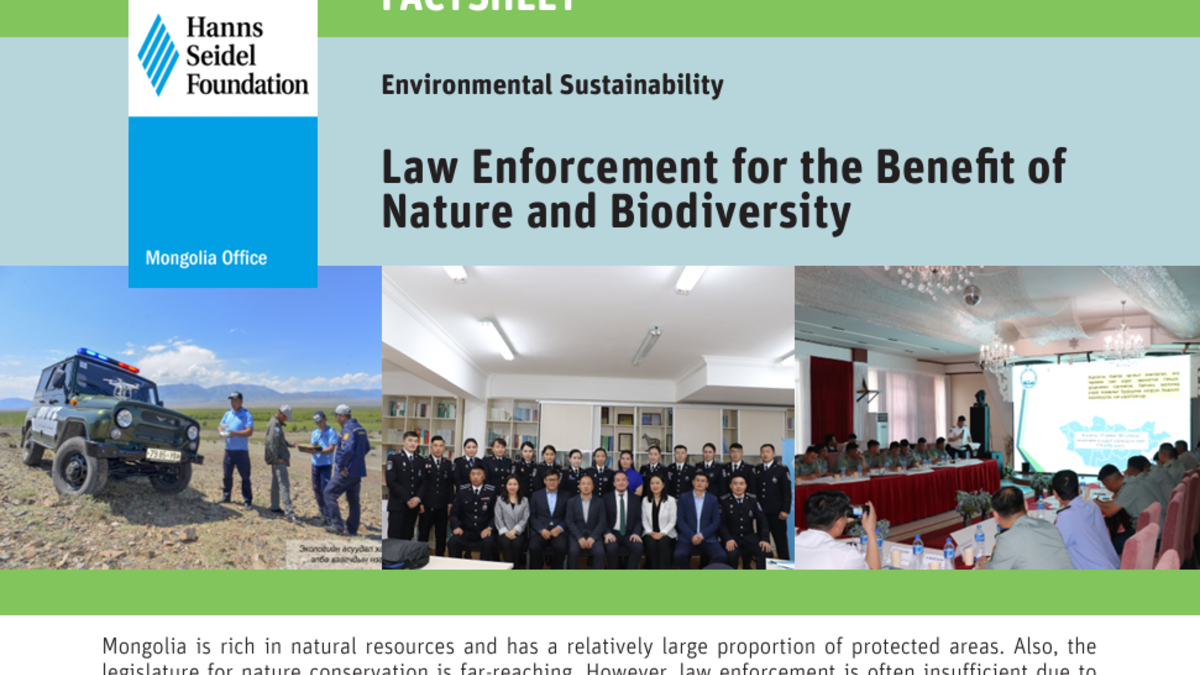
Environmental project
With 30 years of experience in the legal field, the HSF has involved itself in environmental law since 2021.
The focus is not so much on advising legal reforms, but rather on the enforcement of existing law. The development of curricula for environmental officials, the conduction of trainings, and the consultation by German experts are being managed with partners such as the Ecological Police Force, the National Forensic Institute, and the University of Internal Affairs.
Training and exchange with Germany are also part of the project. The core of it consists of the exchange of knowledge across borders to achieve the UN's 17 Sustainable Development Goals as a global challenge.
Challenges
Mongolia is one of the most environmentally pristine countries with nomadic culture, and an economy that strongly depends on natural resources.
Due to steady industrialization, the expansion of further economic sectors and the growing prosperity of the population, the pressure on natural resources (water, soil, air) has increased significantly since the early 2000s. In addition, the boom of the mining industry in Mongolia has driven illegal mining (known as ‘Ninjas’). Because of the relatively large number of protected areas (currently 21% of the country’s area) with different protection statuses (e.g. national parks, biosphere reserves, strictly protected areas), it has become necessary to develop separate legal regulations and guidelines for their protection respectively for the use of land and resources within these areas. Fortunately, the Mongolian government is increasingly demonstrating its commitment to nature conservation and its willingness to implement the UN Convention on the Preservation of Ecological Diversity and other UN SDGs: In recent years, environmental policy reforms have significantly improved the conditions for protecting Mongolian biodiversity and preserving the environment. However, there are still significant deficits and inconsistencies in enforcing environmental protection measures. For instance, gaps and overlaps of environmental laws and regulations, the lack of legal knowledge and skills of law enforcement authorities (e.g. ecological police officers, rangers, forensic inspectors), as well as a lack of public awareness on nature conservation and environmental crimes prevention, remain challenging tasks.
Approaches
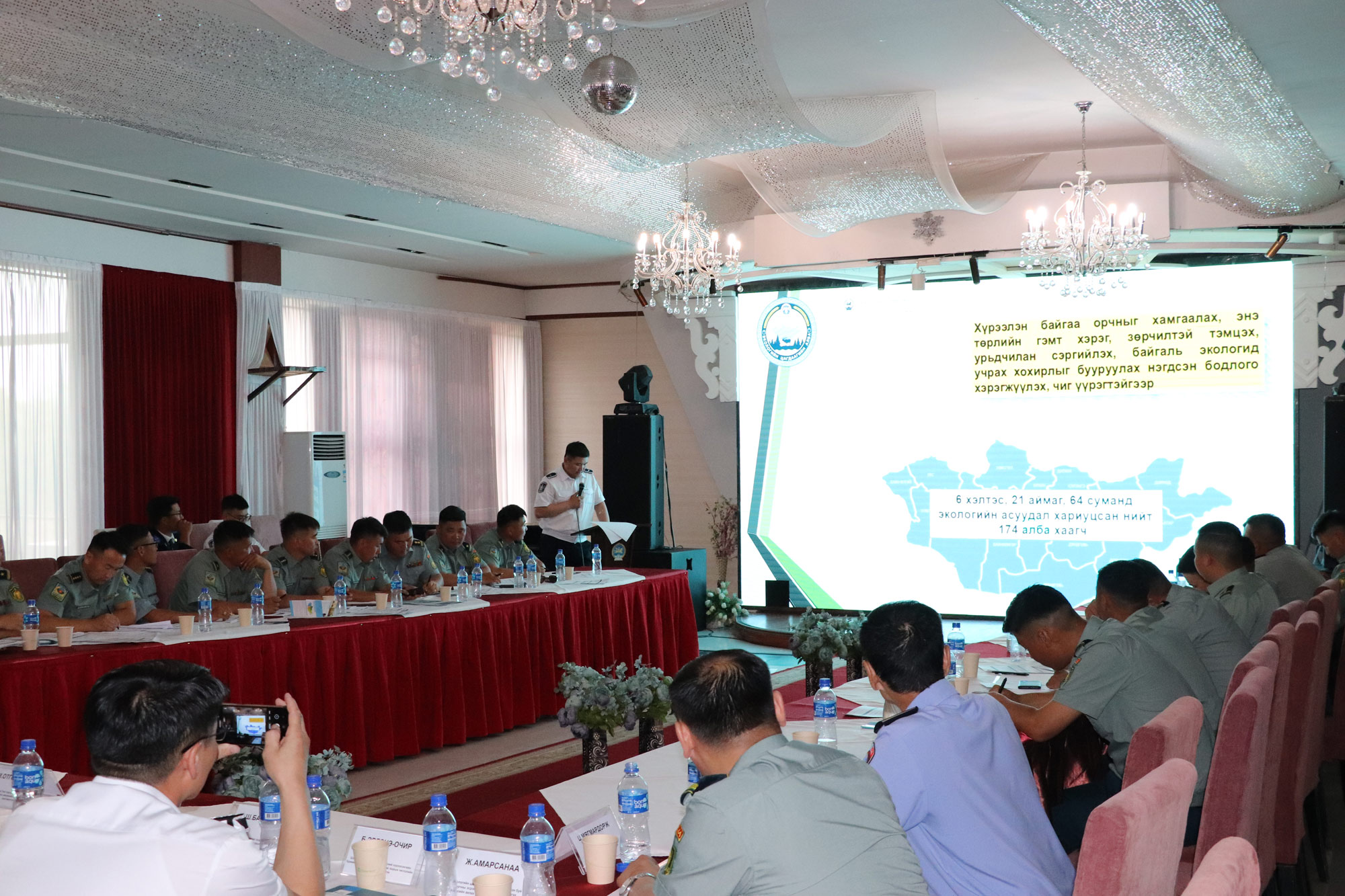
Based on 30 years of experience and collaborative project activities in Mongolia, the Hanns Seidel Foundation has started to promote the enforcement of environmental law in 2022. Since then, a series of workshops, seminars, conferences and study trips are provided in cooperation with the Ministry of Justice and Home Affairs of Mongolia and other local partners in order to qualify ecological police officers, rangers and environmental forensic inspectors.
Public awareness campaigns are conducted to strengthen public acceptance of environmental law and regulations. Moreover, international experts are invited regulary to share their expertise with local partners on the relevant topics.
To make the conditions of the framework of the environmental regulation system clear, coherent, and in line with international standards, any deficits in environmental legislation are to be identified and fixed through workshops and discussions in cooperation with the Ministry of Environment and Tourism of Mongolia.
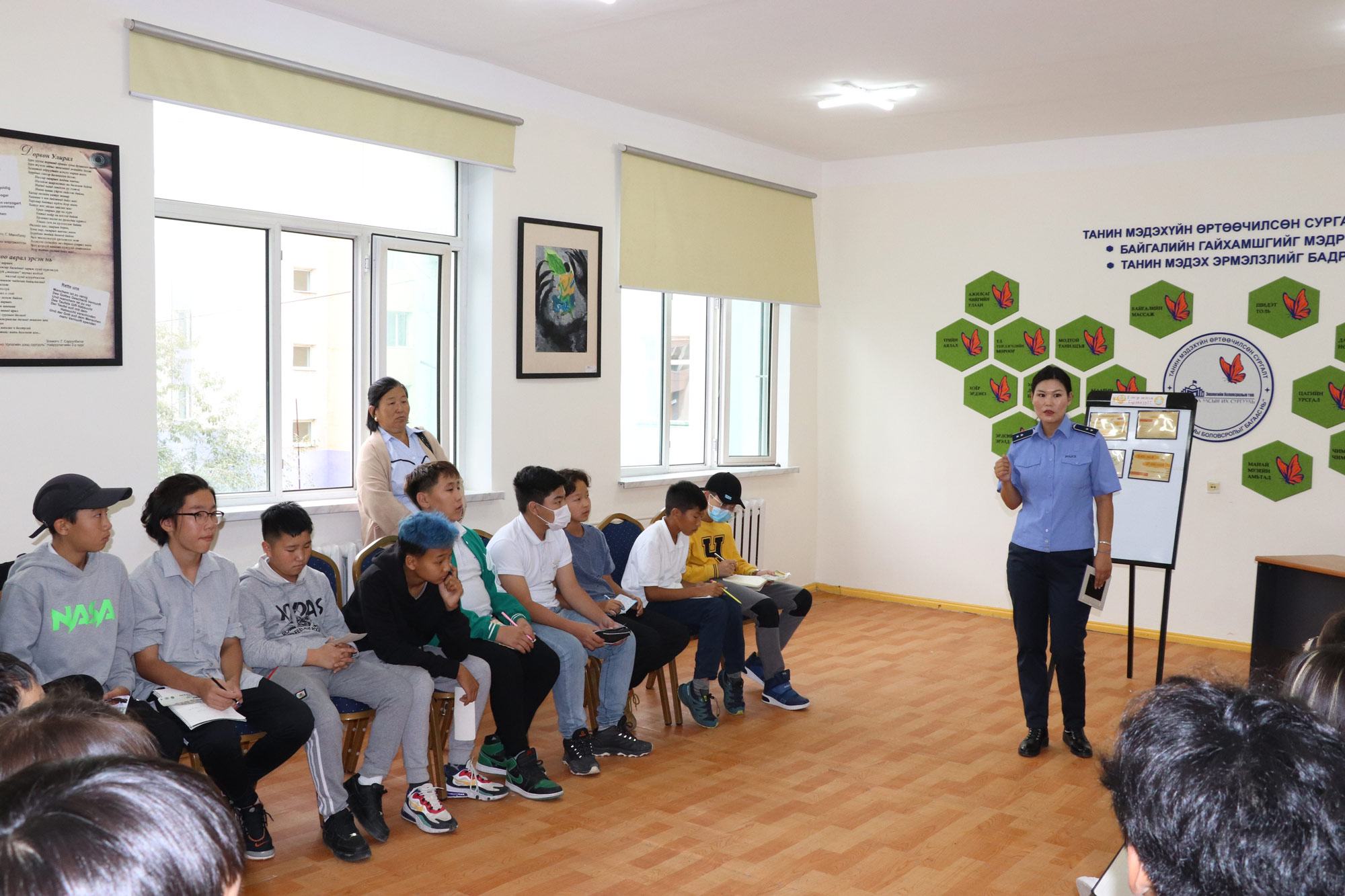
Together with the Environmental Education Center of the Na tional University of Mongolia the program “Engaging Youth in Nature - Environmental Laws” was recently implemented. The program aims to increase the awareness of the young generation about environmental laws as it demonstrates how to deal with natural resources sustainably. Also, strengthen ing the capacity of environmental law enforcement authori ties and increasing public awareness about environmental laws, including the participation of residents in protecting nature and preventing environmental crimes is relevant to the enhancement of environmental regulations through ef fective law enforcement.
Effects
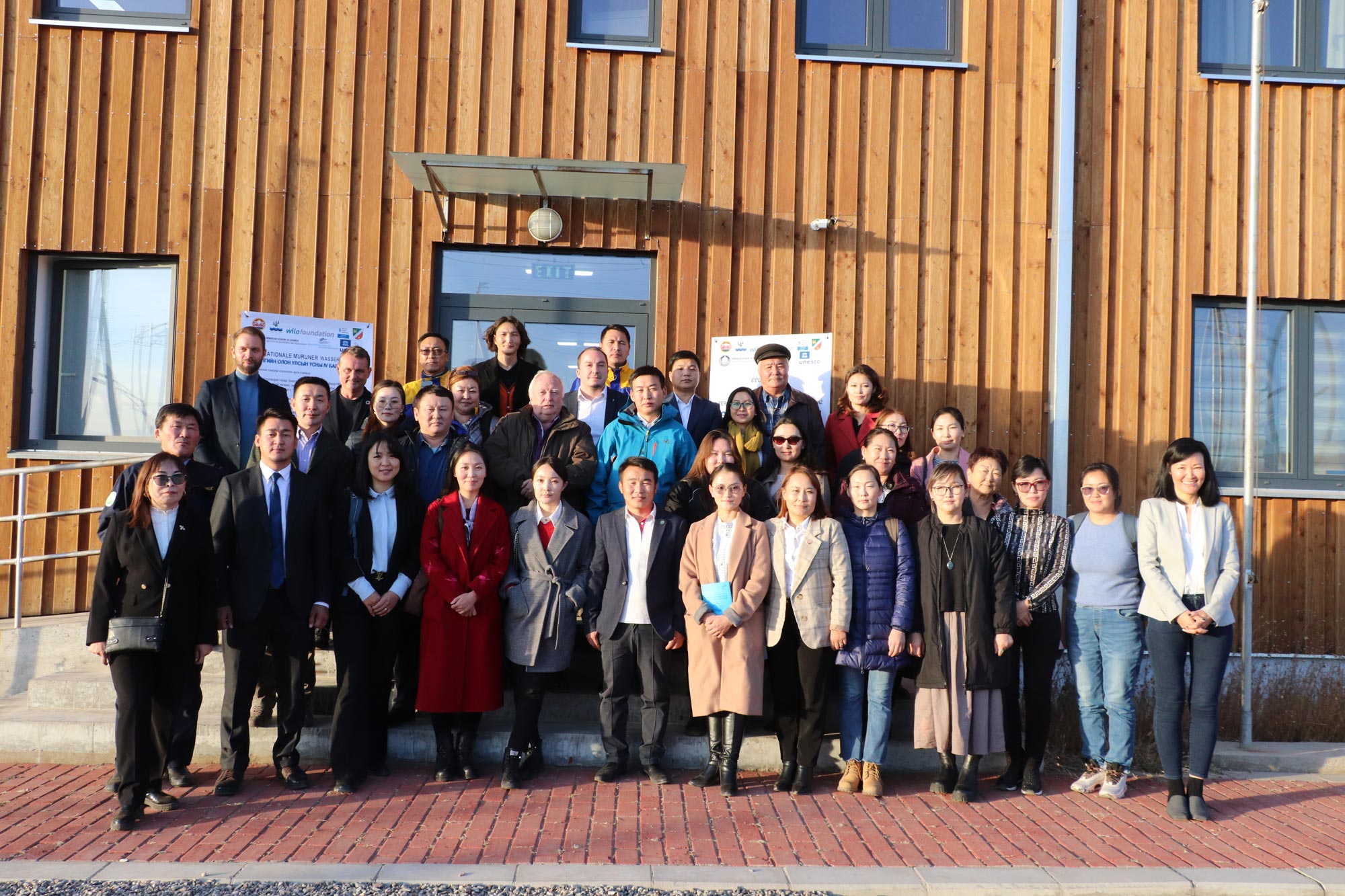
Through the interconnectivity of the project, a close and ef fective cooperation between Hanns Seidel Foundation, gov ernment ministries, law enforcement authorities and other relevant stakeholders, especially local partners, has already been formed. Thus, the project aims to further improve knowledge and common understanding of environmental law enforcement and crime prevention in Mongolia, as well as to remedy deficits in Mongolian environmental regula tions. The core of the project is to transfer the knowledge and the exchange between the target groups in Mongolia and Germany - within Mongolia and with other countries in the region - on environmental conservation and implementation of the 17 Sustainable Development Goals (SDGs).
Download the Factsheet